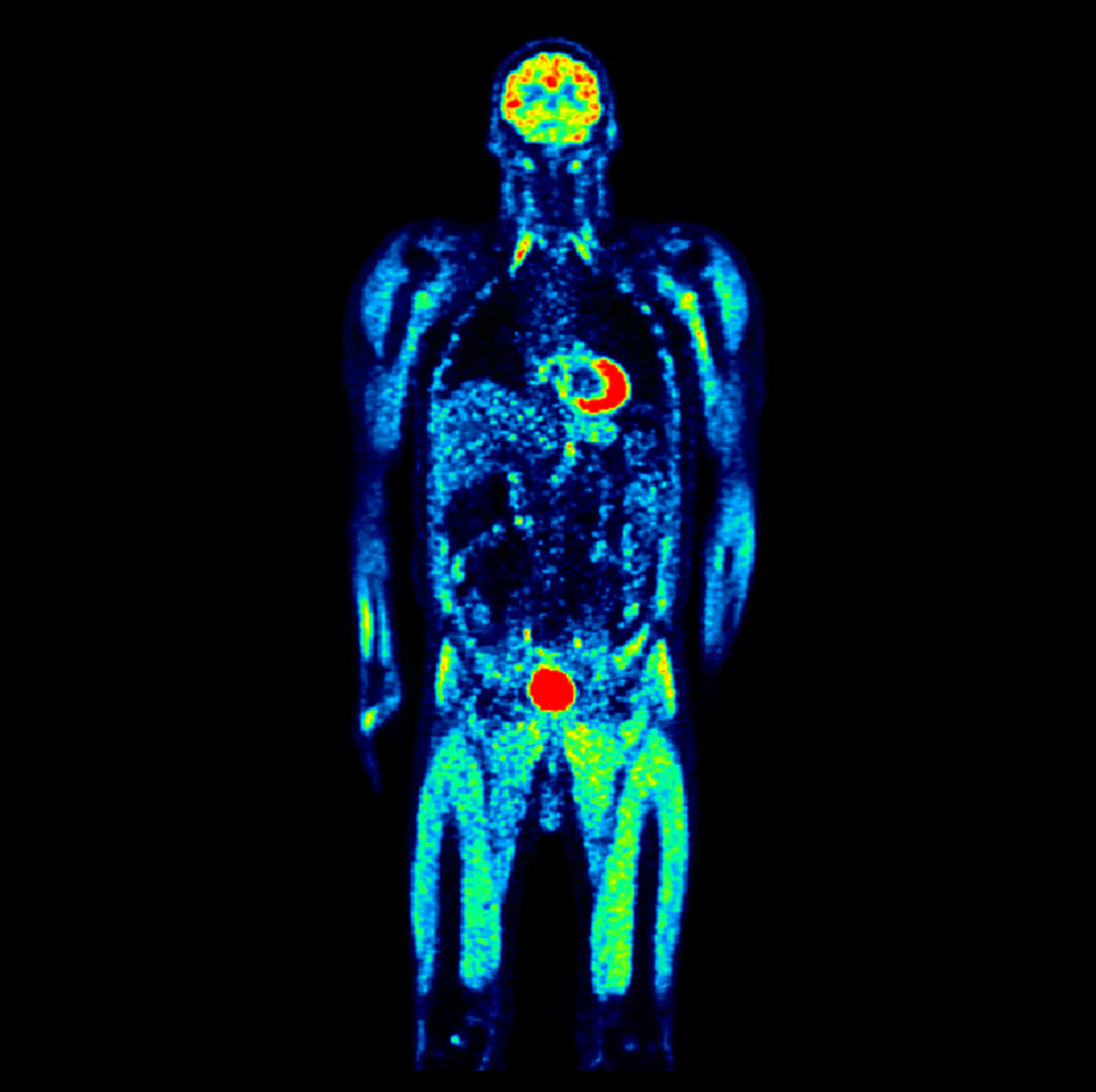
New findings published in EJNMMI Research—from a joint collaboration between scientists at Eli Lilly and company, Uppsala University Hospital PET/MR, CTC, and Antaros Medical—demonstrate that dynamic [¹⁸F]FDG-PET/MRI imaging under hyperinsulinemic euglycemic clamp (HEC) conditions can reliably quantify tissue-specific insulin resistance in patients with type 2 diabetes and obesity.
The study showed that insulin sensitivity in the muscle was very repeatable, similar as the whole-body glucose utilisation derived from the clamp (M-value), and given the somewhat complex procedure, this was a very excellent finding. The results on the repeatability and variance on the glucose uptake in the organs help to set the protocols in future studies and can become an important tool for advancing metabolic research and deepening our understanding of insulin resistance at the tissue level.
Publication title: Tissue-specific and whole-body insulin sensitivity by integrated imaging and hyperinsulinemic euglycemic clamp: A repeatability study in people with T2DM and overweight/obesity
Authors: Laitinen I, Litorp H, Sjöberg F, Ekström S, Haraldsson H, Pierrou S, Korenyushkin A, Kullberg J, Southekal S, Lu M, Coskun T, Milicevic Z, Johansson L.