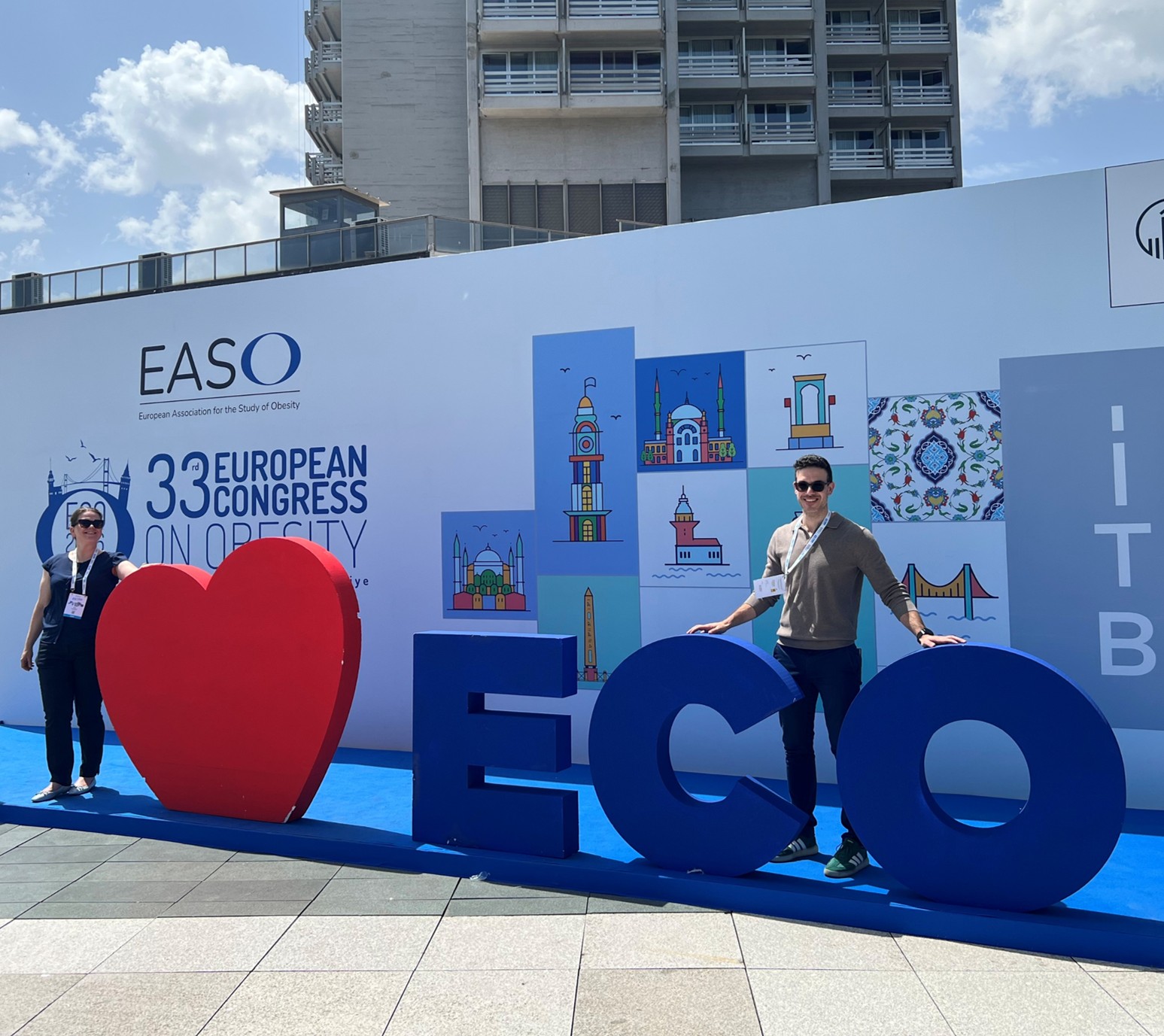
Contributing authors: Iina Laitinen, Senior Director PET Imaging @ Antaros Medical, Nicolas Geades, Director MR Imaging @ Antaros Medical
We had the opportunity to be inspired by and learn more about the latest research in the field of obesity at the 33rd European Congress on Obesity (ECO2026), hosted by the European Association for the Study of Obesity (EASO) and held in Istanbul, Turkey.
The ECO congress has seen substantial growth over the past years, due in large part to the unprecedented success of recent anti-obesity medications (AOMs), but also because of the increased interest and understanding of obesity as a growing worldwide health concern.
The overarching message from the congress was that obesity is a complex, heterogeneous chronic disease, requiring long term care that is centred around health improvement rather than weight loss alone. This message was not lost on anyone in attendance.
Obesity contributes to a plethora of other health complications, and there is a growing body of evidence that shows the limitations of relying on lifestyle interventions in isolation. Obesity is not a question of willpower, yet this stigma still largely exists. Human biology is hardwired to preserve energy and to seek food in times of surplus. Our biology hasn’t changed; our environment has.
There was a lot of interesting research discussed at the congress, but some highlights for us were the focus on obesity in specific patient subgroups like women and the elderly, changes in adipose tissue composition during weight loss, and new data on weight maintenance. In this blog post we discuss these highlights and some of our reflections from the congress.
Highlight 1: Heterogeneity of obesity and a focus on what this means for specific patient subgroups
While many sessions raised the differences and issues regarding obesity in patient subgroups that are sometimes overlooked, this was best reflected in the EASO/EASD Joint Session on the second morning of the congress. The session, called Metabolic Health Across the Lifespan: Sex- and Age- Specific Challenges featured several expert speakers who spoke about the differences in obesity in women, men, and the elderly.
The timeliness of this topic was emphasized as the congress coincided with the announcement of a name change to polyendocrine metabolic ovarian syndrome (PMOS), which was previously known as polycystic ovary syndrome (PCOS). This new name signals the metabolic and endocrine involvement and interplay, and the evidence linking it to obesity has been building for many years. On the topic of women’s health, the unique challenges in obesity during menopause were also discussed. During menopause, changes in metabolic rate, muscle mass, and fat distribution are combined with distinct hormonal shifts, which need to be considered with this patient subgroup.
The links between obesity, sarcopenia and osteoporosis in elderly patients were also a part of this session, and many other sessions throughout the congress. Also, while not a topic in this session, many parts of the congress also highlighted both childhood and preclinical obesity as important subgroups that exhibit important differences. Overall, the heterogeneity of obesity as a disease, and how this manifests in different patient subgroups was very evident throughout the congress.
Highlight 2: Adipose tissue changes in obesity and during weight loss
Another recurring topic was how adipose tissue changes during weight loss, which was addressed in different ways throughout several sessions, including during Part 2 of the EASO Basic & Discovery Science Teaching Workshop. The speakers covered adipose tissue mitochondrial dysfunction, lipolysis, and other structural and cellular changes that occur throughout obesity and weight loss.
It was very interesting to hear research that has shown that weight loss resulting from bariatric surgery and GLP-1 treatment could affect adipose tissue mitochondrial function, while weight loss from dietary restriction alone did not. Changes within the adipose tissue such as adipocyte hypertrophy, inflammatory cell accumulation, formation of fibrosis and vascular alterations, to give a few examples, will have important metabolic implications. Improvements to these aspects may not be captured by looking at weight loss alone, strengthening the argument for looking more broadly at health benefits.
Highlight 3: Weight loss maintenance and weight regain
Some of the most talked about data presented at this year’s congress was about the maintenance of weight loss. In the abstract session, The Maintenance Imperative: Protecting Health Gains after Weight Loss with Incretin Therapies, results from two important maintenance trials; SURMOUNT-MAINTAIN and ATTAIN-MAINTAIN were presented.
These trials explored whether participants could sustain the weight loss they achieved with injectable incretin therapies through looking at the effects of down-titration or switching to oral therapies. Maintenance is a very ‘hot’ topic at the moment, and forms an important part of the bigger questions that remain around long term effects of AOMs.
Closing thoughts
It was great to see and hear about all the scientific research that was presented at the European Congress on Obesity this year. We chose just a few highlights and reflections to discuss in this blog post:
- Heterogeneity of obesity and a focus on what this means for specific patient subgroups: including obesity in women with PMOS and going through menopause, as well as the elderly brought important discussions about underrepresented patient subgroups in obesity research and largely undiagnosed at the population level.
- Adipose tissue changes in obesity and during weight loss: these sessions highlighted again the importance at looking beyond weight loss to other changes that can signal metabolic improvements and lasting health benefits.
- Weight loss maintenance and weight regain: new data looking at the effects of down-titration and switching to oral formulations on weight maintenance helped to fill some existing knowledge gaps regarding the long term effects of AOMs.
The field is moving quickly, and we are already looking forward to attending ECO 2027 next year in Munich, Germany.
Blog disclaimer:
The views and opinions expressed in this article are solely those of the contributing author/s. These views and opinions do not necessarily represent those of Antaros Medical.
Contact details:
If you have any questions regarding this article, please reach out to press@antarosmedical.com